Skip to content
Kayfabe Diary is a photographic project by photographer Marko Simonen. Marko works in pro wrestling as a media professional, and focuses on pro wrestling photography, video production, graphic design, and much more. Marko Simonen exists at a distinct intersection where the scripted drama of professional wrestling meets the rigorous discipline of the creative arts. In his piece, "Creativity, Theft, and Waste of Time," he strips away the romantic veneer of the artist to reveal the gritty machinery of effort and influence. Drawing on his background in the pro wrestling world where "kayfabe"—the maintenance of a fictional persona—is a core principle, he explores the tension between authenticity and performance. To Marko, the creative process is less about divine inspiration and more about the deliberate, often messy act of synthesis. He begins by attacking the ego-driven concept of pure originality. He suggests that every creator is essentially a thief, a remixer of the ideas they have consumed. This perspective is deeply informed by the professional wrestling industry, where performers build their identities on the foundations laid by those who came before them. Simonen argues that the quality of any creative output is determined by the quality of the inputs. One must be a discerning consumer to be an effective producer; if the influences are shallow, the result will be equally superficial. This is a fundamental law of his creative universe: excellence is built on a foundation of high-quality consumption. The narrative then moves into the psychological architecture required to sustain long-term work. Marko advocates for a strategic silence, suggesting that the constant noise of peer feedback and industry trends can drown out an individual’s internal compass. He places a high value on the "flow state"—those periods of repetitive, low-friction work where the ego vanishes and the output increases. He describes this state not as a lucky break, but as a byproduct of showing up and doing the work. Ultimately, the article serves as a sobering reminder of the creative professional's place in the world. Marko challenges creators to accept that they are not inherently special and that the world may never notice their contributions. This existential honesty is the backbone of his philosophy: if the work is worth doing, it must be worth doing in the dark. By merging the performative lessons of the wrestling ring with the introspective demands of writing, Marko provides a blueprint for creativity that is grounded in reality rather than myth. For him, the only true failure is the waste of time spent waiting for a sense of permission or a bolt of inspiration that may never arrive.

Creativity, Theft, and Waste of Time

Creative work can sound like a simple thing to do, but it’s complex. A part of it comes naturally, the rest of it takes tons of effort. Here’s the idea about ideas.

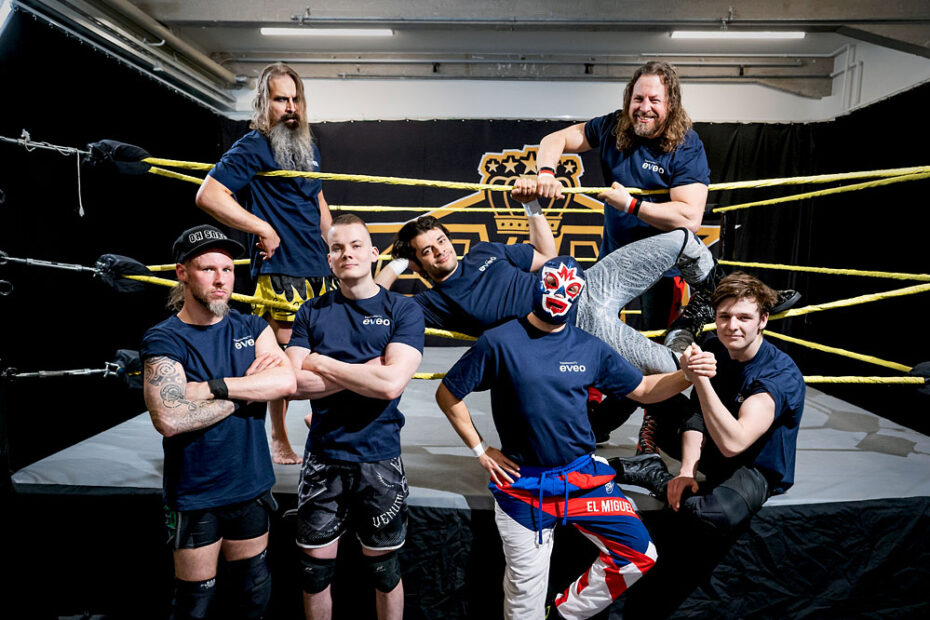
Working in the independent pro wrestling business is a lot of work. Being just a pro wrestling photographer is not enough. This image tells the story of Marko Simonen (of Kayfabe Diary), and all the various jobs required to be taken care of in indie pro wrestling. In "Beyond the Lens: The Bigger Picture of Indie Pro Wrestling," Marko provides a candid look at the exhausting, multifaceted reality behind the production of a live professional wrestling event. He begins by addressing a common misconception: that his role is limited to the camera lens. To the casual observer, he is "the photographer," but Marko reveals that photography accounts for only a small portion of his actual workload. Instead, he describes himself as a "multitool" or a "one-man army," a necessity in the lean, high-stakes environment of independent wrestling promotions where the success of a show hinges on a few individuals performing the work of an entire production crew. His background in the creative arts is central to this narrative, acting as the engine for the pro wrestling promotion’s visual and digital presence. Long before the ring is even constructed, Marko is immersed in the "80%" of his job that the audience never sees. This involves the meticulous design of logos, posters, and apparel, as well as the technical labor of shooting and editing promotional packages for wrestlers. His creative discipline extends into the logistical realm, where he manages ticketing pages, website updates, and paid marketing campaigns. By the time show day arrives, his artistic focus shifts toward the physical, as he assists in building the ring, setting up PA systems, and rigging the lighting. The article captures the transition from careful preparation to the "controlled chaos" of a live pro wrestling broadcast. Drawing on his past experiences as a wrestler and referee, Marko possesses an intuitive understanding of the ring’s requirements that goes beyond mere technical skill. During the live event, he is a blur of activity—triggering entrance themes, operating smoke machines, and communicating with the tech crew, all while trying to capture the perfect match photographs. Ultimately, Marko’s account is a testament to the grit required to sustain the independent wrestling scene. He highlights the unpredictability of the job, from managing technical failures and injuries to navigating the challenges of outdoor venues. While he acknowledges the burden of wearing so many hats, he concludes with a sense of optimism, noting the growth of a dedicated team of volunteers who share a genuine love for the business. The narrative serves as a "wider angle" view of the industry, proving that the spectacle in the ring is only possible because of the invisible, relentless grind happening just out of frame.

Beyond the Lens—The Bigger Picture of Indie Pro Wrestling

Sam Gradwell, formerly of NXT UK, and who later became SLAM! Champion in Finland, landed in 2022. As we picked him up for the matches, he said to me, “So, you’re the photographer!” Everyone in… 
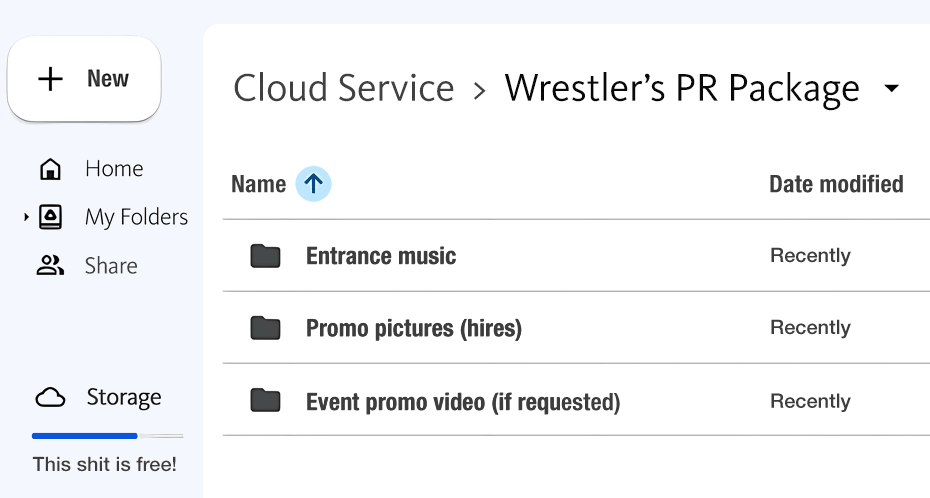
Read about all the fundamental things to have in a professional wrestler's promo package. Promo pictures, and entrance music forst and foremost. The article includes also entrance videos and promo videos for pro wrestling promoters. In his article "Professional Wrestler's Promo Package," Marko provides a pragmatic guide to the essential digital assets every pro wrestler needs to secure bookings and maintain a professional reputation. This perspective is uniquely informed by his dual career path; as a creative professional, he understands the technical demands of high-quality design, while his deep roots in the professional wrestling industry provide him with firsthand knowledge of the logistical chaos behind the curtain. Marko frequently finds himself tasked with creating event posters, managing entrance music, and overseeing audio-visual production, making him acutely aware of how a talent's preparation—or lack thereof—impacts the success of a show. The central thesis of the piece is that a wrestler’s "promo package" is their most vital business tool. Marko emphasizes that promoters and designers are often working under tight deadlines, and providing them with organized, high-quality assets through a cloud folder is the simplest way to stand out. He begins with photography, which he considers the cornerstone of a wrestler’s brand. Drawing on his experience as a designer, he explains the frustration of receiving low-resolution or poorly cropped images. He advocates for professional lighting and specific framing—recommending shots from the knees up—to ensure the talent can be integrated seamlessly into various marketing formats. Beyond the visual, Marko delves into the auditory and video elements of the pro wrestling industry. He highlights a common logistical bottleneck: the lack of accessible entrance music. He warns against the last-minute scramble of sending YouTube links and instead advises performers to maintain dedicated mp3 files. Furthermore, he offers practical tips for video promos, stressing that while smartphones are acceptable, factors like background noise and framing are crucial to maintaining a professional image. Ultimately, Marko’s narrative is one of professional accountability. He frames the promo package not just as a collection of files, but as a reflection of a wrestler’s respect for the production team and the promotion's brand. By merging his artistic sensibilities with his knowledge of the squared circle, he demonstrates that success in independent wrestling is determined as much by the "invisible" work of digital preparation as it is by the action inside the ring. For Marko, the goal is simple: make the promotion’s job easier so that they can make the talent look like a star.

Professional Wrestler’s Promo Package

If you’re going to a wrestling promotion for the first time, here are some important things you might want to send over. Unfortunately, these issues are something I’m all too familiar with. Why is that?… 
TV production with SLAM! Wrestling Entertainment in Finland, 2023. Two different TV series about professional wrestling for Finnish national television broadcast. Story and footage by Marko Simonen / Kayfabe Diary. Marko Simonen finds himself submerged in the high-pressure world of broadcast television in his article, "TV Production, Pro Wrestling, and Furious Editing." In this piece, he bridges the gap between the visceral, sweat-soaked energy of a live pro wrestling event and the polished, cinematic reality of a network series. His background as both a creative artist and a professional wrestling veteran allows him to navigate this space with a unique dual perspective. He understands the narrative beats and psychology of a match from the perspective of a performer, yet he possesses the technical vocabulary and aesthetic discipline of a professional editor to translate that action for a television audience. The narrative describes the "furious" pace required to transform raw footage into cohesive and compelling finished products, such as the SLAM! Boot Camp and Painin Otteessa series. Marko explains that in the fast-moving world of independent pro wrestling, the luxury of time is often a myth. He details the grueling hours spent at the editing desk, where every frame must be scrutinized to ensure the story told in the ring is captured with maximum impact. This is not merely a technical exercise; it is an act of narrative preservation. He describes his role as a multifaceted creator, taking responsibility for lighting, audio, and camera work, including a unique "one-take" bell-to-bell match shot from inside the ring. He also touches upon the technical infrastructure and psychological toll required for such a feat. Marko discusses the importance of meticulous organization and the mental stamina needed to manage fragmented segments that do not always seem to mesh together. He describes the editing process as a relentless struggle against the clock and the constraints of a predetermined runtime, a process so intense it led to moments of vocal frustration. His extensive experience in the creative arts provides the foundation of discipline needed to maintain high artistic standards even when the production timeline is severely compressed and the stakes involve national broadcast. Ultimately, the article serves as a tribute to the invisible labor that defines modern professional wrestling media. Marko argues that the magic of the "squared circle" is only half the battle; the other half is won in the edit suite through sharp cuts and rhythmic storytelling. He concludes by highlighting the unpredictable nature of the industry, recounting how a controversial match ended their run on the station. By combining his ring-tested instincts with his artistic expertise, Marko demonstrates that the most important moves in professional wrestling often happen on a keyboard rather than a canvas. For him, the story is only truly told once the final cut is made.

TV Production, Pro Wrestling, and Furious Editing

Some years ago, there was a brand new national TV channel starting out, and they needed programming. We ended up having talks, and one thing led to another. Before we knew it, we were producing… 
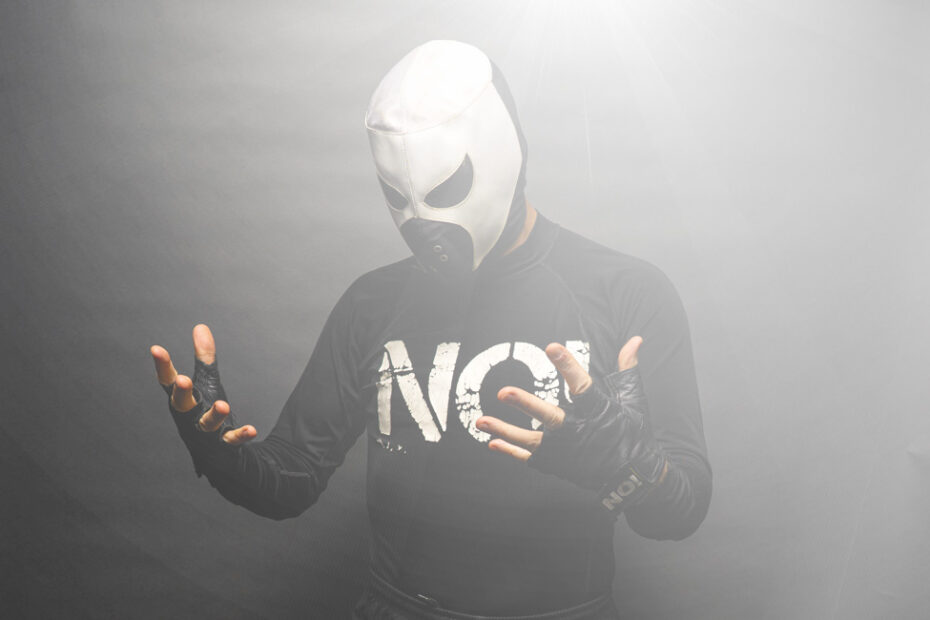
In a pro wrestling show, the event center's or venue's lighting can play a crucial part in how the show looks. In his article "Bad Light!", Marko Simonen delves into the technical and logistical hurdles of illuminating the "squared circle" within the unpredictable environments of independent professional wrestling. His narrative is shaped by a unique dual identity: he is both a seasoned veteran of the wrestling industry and a disciplined creative professional with an eye for cinematic detail. This background allows him to see a venue not just as a place for a match, but as a complex visual canvas where the wrong shadow or a flickering bulb can undermine the entire production. The piece centers on the recurring struggle against substandard venue lighting. Marko explains that when traveling to new towns, he often encounters spaces that are woefully under-equipped for the demands of a high-quality broadcast. He highlights a common irony in the business: venue managers often promise sufficient lighting, yet his experience has taught him to prepare for the worst. To combat these deficiencies, he has curated a mobile arsenal of lighting equipment, including classic halogen "redheads" and a vast collection of gels to correct color temperatures. This proactive approach ensures that the show maintains a professional look regardless of the venue's limitations. A significant portion of the article is dedicated to the distinction between lighting for a live audience and lighting for a camera sensor. Marko explains that while the human eye is forgiving, video cameras are not. He discusses the technical nightmare of "spotty" light, where a performer’s shiny skin or white attire can cause blown-out highlights in one corner of the ring while leaving the other in total darkness. His creative philosophy involves balancing the need for even, corner-to-corner illumination with his own preference for dramatic shadows. He views lighting as a tool to enhance the storytelling, provided it does not interfere with the audience's experience or the technical integrity of the video stream. The narrative also captures the physical and temporal pressure of the job. Marko describes arriving at a venue with only a few hours to transform a dimly lit club or hall into a broadcast-ready arena. This requires a "multitool" mindset, where he utilizes everything from gaff tape and zip ties to clamps and adapters to rig lights in seemingly impossible locations. By merging his wrestling-tested instincts with his technical expertise, Marko illustrates that a successful show is built on a foundation of invisible, meticulous labor. For him, the battle for a perfect shot begins long before the first bell rings, fought with extension cables and a Leatherman in the quiet hours before the crowd arrives.

Bad Light!

One of the challenges in hitting new towns and venues can be the venue’s lighting. Sure enough, I’ve seen some truly bad lighting situations. On some occasions, the only way to make it work is… 
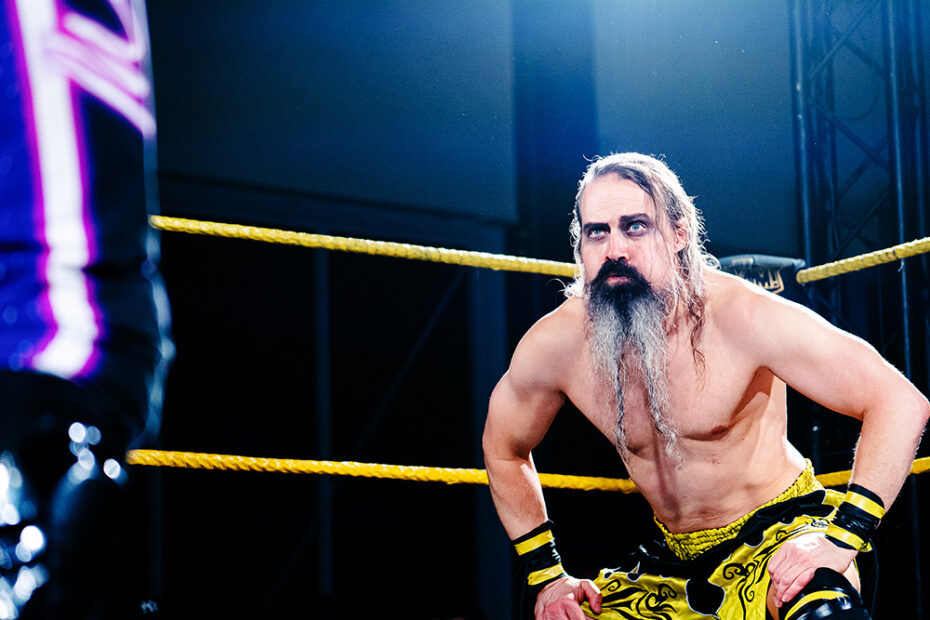
One of Finland's pro wrestling veterans, Stark Adder looking focused in his wrestling match. In his article "Focus is Key," Marko Simonen explores the cognitive and physical endurance required to capture the lightning-fast world of professional wrestling through a camera lens. Positioned at a unique crossroads as both a creative artist and a veteran of the wrestling industry, Marko understands that the success of a broadcast or a photo gallery depends on more than just technical settings; it requires a disciplined, unwavering mental presence. His background in the ring provides him with an intuitive sense of timing—a knowledge of when a high-flying move is about to launch—but his creative side recognizes that without total concentration, those split-second moments are easily lost to the chaos of the arena. The narrative reveals the internal struggle of a creator whose mind is naturally observant and sensitive to his surroundings, which can sometimes lead to distraction in a high-stimulus environment. In the independent wrestling circuit, where Marko often juggles multiple roles simultaneously, maintaining "the task at hand" becomes a form of mental gymnastics. He admits that his focus can be elusive, necessitating a pragmatic, almost clinical approach to state management. This is not just about the art of photography; it is about the "multitool" reality of show production, where the failure to focus can result in a missed shot or a technical lapse that affects the entire event. To combat the fatigue of irregular schedules and poor sleep, Marko details a specific "toolkit" of aids he keeps in his camera bag. Drawing on his experience with the grueling physical demands of the wrestling business, he describes his use of caffeine, nicotine gum, and specific supplements like L-tyrosine to sharpen his attention levels. He treats his brain like a piece of high-performance equipment that requires specific fuel—even something as simple as sugar from a piece of candy—to remain "invincible" during a long show. This highlights the grit of the industry; the glamour of the final photograph is the result of a deliberate struggle against exhaustion and dehydration. Ultimately, Marko’s account serves as a reminder that creativity in professional wrestling is an act of sustained will. By merging the performative awareness of a wrestler with the precision of a photographer, he demonstrates that "focus" is the bridge between raw action and lasting art. He does not offer health advice, but rather a candid look into the survival tactics of a professional dedicated to his craft. For Marko, the goal is to remain sharp enough to catch the definitive image of the night, proving that in the world of pro wrestling, the most important gear is the clarity of the person behind the camera.

Focus is Key

I don’t know about everyone else, but to me, focus is key. This becomes especially important if it’s a wrestling show where I need to take care of multiple things, to make sure everything runs… 
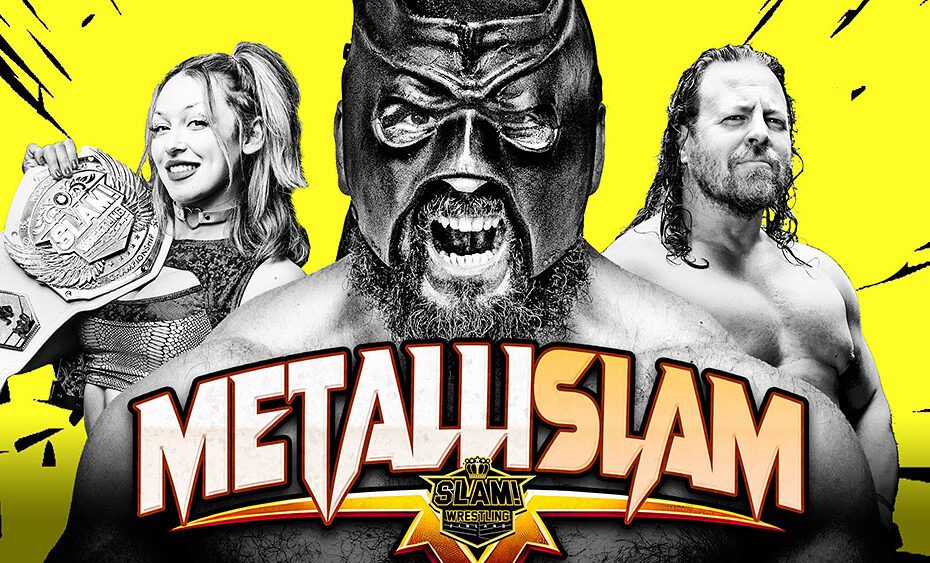
MetalliSlam was a professional wrestling event in Helsinki, organized by SLAM! Wrestling Finland. In "Pro Wrestling, Multitasking, and a Hurrah," Marko Simonen provides a compelling look at the controlled chaos that defines a live independent pro wrestling event. Centered on the "MetalliSLAM!" show held in Helsinki in June 2024, the article serves as a testament to the "multitool" nature of his role within SLAM! Wrestling Finland. Marko explains that while many fans recognize him primarily as a photographer, his contribution to the industry is far more expansive, blending his technical creative arts expertise with the high-stakes logistical demands of professional wrestling. His background as a designer and video producer is the engine that drives the show's presentation, ensuring that the visual and auditory elements are as polished as the action in the ring. The narrative details a grueling pre-show period where Marko’s creative discipline was tested by a series of logistical hurdles. When a delay at the venue left the crew an hour behind schedule, Marko stepped into a multifaceted leadership role. He was responsible for everything from drafting condensed scripts for the video crew to setting up the entire lighting rig from scratch, as the venue lacked its own infrastructure. His artistic eye was crucial here; he had to determine whether the lighting would be sufficient for both the live audience and the digital stream. This preparatory phase also included the creation of lower-third graphics and the curation of musical playlists, illustrating how his creative labor begins long before the first fan enters the building. Once the broadcast went live on TrillerTV, the article shifts into a high-octane account of "multitasking" in real time. With a substitute producer in the booth, Marko took on additional responsibility, serving as the central nervous system of the production. He describes a dizzying array of tasks: giving physical hand cues to the ring announcer, coordinating entrance music, and directing the backstage camera operator, all while maintaining a watchful eye on the overall script. Remarkably, he managed these duties while simultaneously photographing the matches. He notes that his decades of experience in the wrestling business have made photography an instinctive act, one that requires very little active thought and frees up mental resources for the technical management of the show. Ultimately, the piece is a humble acknowledgment of the collaborative effort required to sustain independent wrestling. While Marko’s individual effort was monumental, he concludes by highlighting the importance of his crew and the shared passion that keeps the industry moving. The article proves that the spectacle of a live broadcast is a delicate balance of technical skill and ring-tested intuition. For Marko, the success of the night was not just about the quality of the photos, but about the seamless execution of a complex, multifaceted production where every "hat" he wore was essential to the final "hurrah."

Pro Wrestling, Multitasking, and a Hurrah

Something our wrestling fans might not know about me is that I’m not just a photographer. At SLAM! Wrestling Finland, I tend to wear many hats. One particular case in point was our MetalliSLAM! event… 
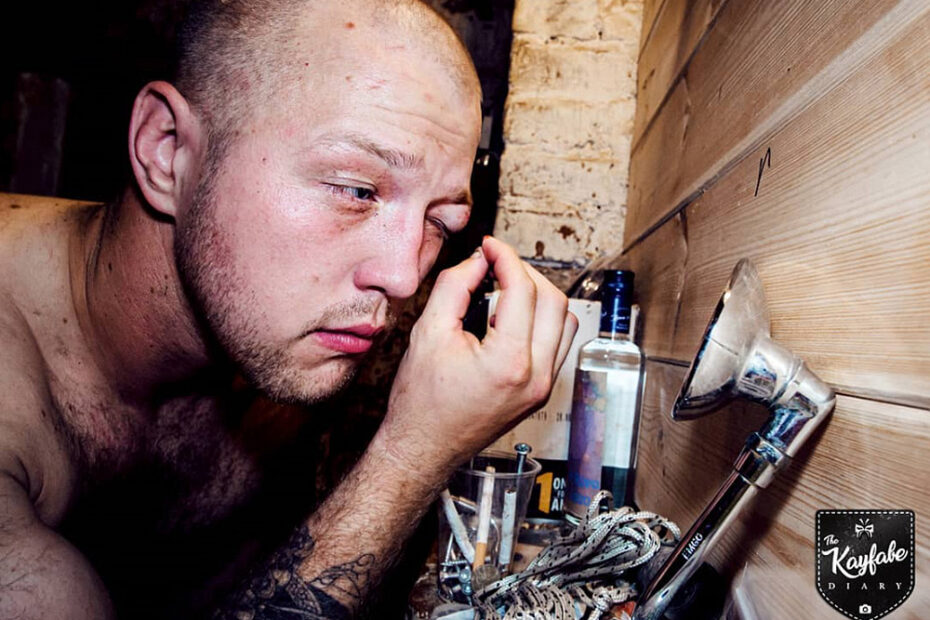
Professional wrestler Mikk Vainula of Estonia, treating his eye injury backstage after his wrestling match in the ring. In his article "Photographs? What For?", Marko Simonen examines the shifting landscape of visual media through the eyes of both a creative professional and a veteran of the squared circle. He addresses a modern paradox: while the proliferation of high-quality smartphone cameras, stock photo libraries, and AI-generated imagery has made visual content more accessible than ever, it has simultaneously triggered a perceived degradation in the value of the single, captured moment. To Marko, this phenomenon creates a vital distinction between the price of an image and its inherent worth. His background in the arts allows him to see beyond the digital noise, identifying a unique "magic" in the permanence of a still photograph that fleeting videos or generated graphics often fail to replicate. The narrative explores how an image serves as a vessel for storytelling. Drawing on his experience in the wrestling industry—a world built on larger-than-life characters and dramatic physical narratives—Marko argues that a photograph is not just a static record but a text to be "read." He poses a series of internal questions that reflect his artistic discipline: Who is the subject? What are they feeling? How does the light interact with the grit of the setting? For Marko, the composition is a deliberate act of narrative framing. He recognizes that the emotional resonance of a picture is deeply personal, and a viewer’s interpretation might differ from the person standing next to them. This sensitivity to the "vibe" of a shot is what separates a generic snapshot from a piece of art that demands admiration and analysis. Furthermore, Marko highlights the historical weight of his work. Since 2010, he has been meticulously building a photographic archive of professional wrestling in Finland. In this context, the photograph becomes a tool for documentation and preservation. In an industry where matches are often ephemeral and performers come and go, his lens provides a sense of continuity. He suggests that the craft of photography often chooses the individual, rather than the other way around. This vocational pull has led him to capture everything from the intensity of a championship bout to the raw, backstage reality of an injured performer. Ultimately, the article is a defense of the intentional image. Marko concludes that despite the technological shift toward automation and speed, the human element of "showing up" and carefully composing a shot remains irreplaceable. By merging his ring-tested intuition with his creative expertise, he demonstrates that a single, well-timed photograph can document history and stir the soul in a way that no algorithm can match. For him, the value of a photograph lies in its ability to stop time and force the world to look closer at the stories unfolding within the frame.

Photographs? What For?

Over the last many years, it’s felt like a degradation in value with photos and imagery. Smartphones started producing better and better images, free stock photo sites were popping up left and right, and then… 
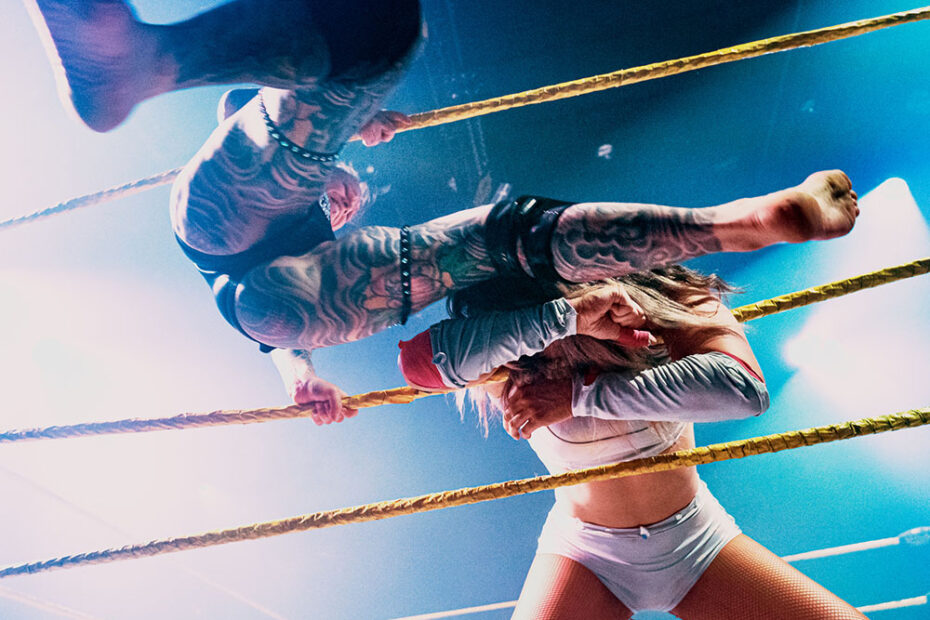
Female pro wrestler Aliss Ink The Scandinavian Dragon (Sweden) doing the famous 619 move on England's Heidi Katrina in 2025. In the article "Photography Is a Fake Sport," Marko Simonen explores the physical peril and high-stakes athleticism required to photograph professional wrestling from the ringside. He dismantles the notion that the person behind the lens is a passive observer, instead positioning the photographer as a participant in the "controlled chaos" of the event. His perspective is deeply rooted in his history as a creative professional and a former pro wrestler and referee. This background gives him a "sixth sense" for the geometry of the ring, allowing him to anticipate moves before they happen. The narrative centers on the physical consequences of pursuing the perfect, dynamic shot. Marko describes a personal philosophy of "getting close," a drive that often places his head and equipment directly in the trajectory of high-flying maneuvers. He recounts several "close calls" and literal hits, such as taking a boot to the skull during a modified forward roll or having a hat kicked off by a "619" kick. These moments are not merely occupational hazards; they are the price of admission for an artist who refuses to settle for safe, distant angles. His creative ambition often overrides his instinct for self-preservation, leading to a gritty, hands-on style of documentation that mirrors the intensity of the professional wrestlers themselves. Marko’s background as a referee and wrestler provides a layer of professional irony to these mishaps. He understands the mechanics of "the Miz-line" or a TLC match, yet he describes the humbling experience of being caught out of position. He highlights the necessity of "doing one's homework" on visiting talent to avoid becoming an accidental part of the choreography. Ultimately, the piece serves as a reminder that capturing the "fake" sport of professional wrestling requires a very real level of physical commitment. Marko argues that the photographer’s role is a blend of artistic vision and awareness. By merging his ring-tested reflexes with his dedication to wrestling photography, he demonstrates that the most compelling pro wrestling images are often forged in the danger zone. For Marko, the bruises and near-misses are simply part of the narrative, proving that the story of a wrestling match is told as much by the sweat on the lens as the action on the canvas.

Photography Is a Fake Sport

I recall a couple of occasions when a visiting photographer, unfamiliar with pro wrestling, quite literally got squashed like a bug when a wrestler suddenly came over the top rope. I’ve also had lots of… 
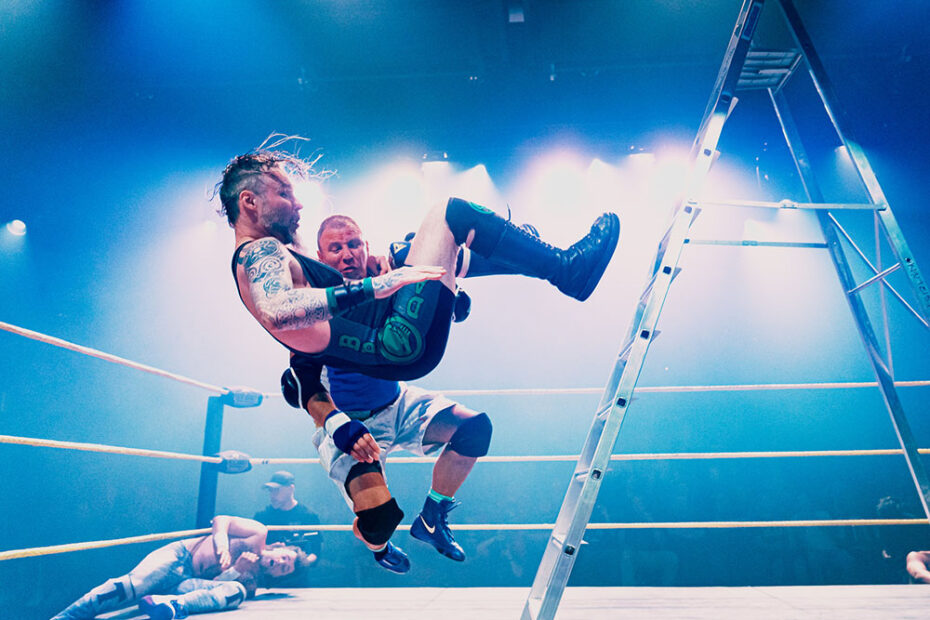
Finnish professional wrestler Miika Forsstrom throws down Canada's The Back Breaker Dylan Broda in a TLC match 2025 (Tables, Ladders & Chairs). Marko Simonen operates at a demanding intersection where the disciplined precision of photography meets the unforgiving physical toll of professional wrestling. In his article "Holy Cramp!", he provides a visceral account of a night when these two worlds collided in a painful display of human limitation. As a seasoned veteran who has spent years navigating the ring as a performer and the ringside as a photographer, Marko understands that the spectacle of a live event is built on a foundation of invisible, exhausting labor. His creative background informs his belief that every match is a story worth documenting. The narrative unfolds during Spring SLAM! in Vantaa, Finland, following a day of intense preparation. Marko’s role in independent wrestling often requires him to function as a "one-man army," building the ring, rigging the lighting, and managing the logistical errands that keep a pro wrestling show running. By the time the main event—a chaotic six-person TLC match—began, the cumulative strain had reached a breaking point. Marko describes the sudden, agonizing onset of muscle cramps in his right leg. In the high-stakes environment of a "Tables, Ladders, and Chairs" match, where the action is fast and the visuals are iconic, the photographer cannot afford to be stationary. Yet, Marko found himself trapped in a physical prison, his muscles seizing even as he fought to maintain his artistic focus. The situation worsened when his left leg also succumbed to the same involuntary tremors. He draws on the "gut it out" mentality of his wrestling background to survive the final ten minutes of the bout. He recognizes that missing a crucial moment, such as the winner grabbing the briefcase, would be a failure of his creative duty to document the wrestling promotion's history. His commitment to the final product overrode his immediate physical distress, proving that the artist’s eye must remain sharp even when the body is failing. Ultimately, the article serves as a pragmatic guide for creators working in physically demanding fields. Marko concludes that the "magic" of pro wrestling photography is heavily dependent on the mundane details of hydration, nutrition, and proper equipment. He reflects on the necessity of salt and electrolytes, turning a moment of physical crisis into a professional lesson on self-preservation. By merging the performative endurance of the ring with the technical demands of the photographic lens, Marko illustrates that creativity is not just an intellectual exercise; it is an athletic one. For him, the ability to tell the story through images depends entirely on the artist’s ability to remain standing when the final bell rings.

Holy Cramp!

I’ve jokingly said sometimes that photography is an upper-body business. But, some days, you’re going to be on your feet all day long. You’d better have good shoes, drink water, and remember to eat. I…