
Skip to content

Focus is Key

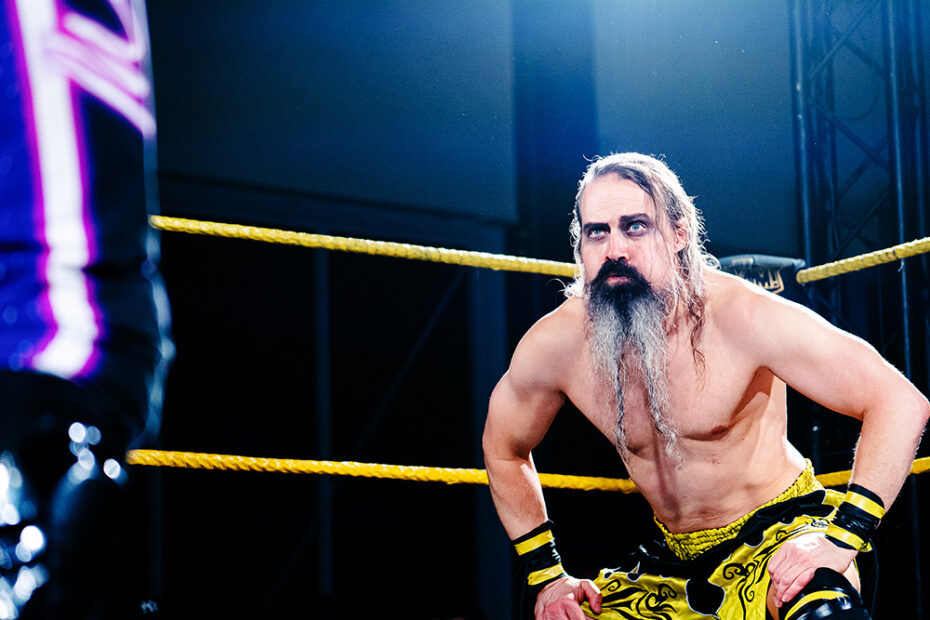
One of Finland's pro wrestling veterans, Stark Adder looking focused in his wrestling match. In his article "Focus is Key," Marko Simonen explores the cognitive and physical endurance required to capture the lightning-fast world of professional wrestling through a camera lens. Positioned at a unique crossroads as both a creative artist and a veteran of the wrestling industry, Marko understands that the success of a broadcast or a photo gallery depends on more than just technical settings; it requires a disciplined, unwavering mental presence. His background in the ring provides him with an intuitive sense of timing—a knowledge of when a high-flying move is about to launch—but his creative side recognizes that without total concentration, those split-second moments are easily lost to the chaos of the arena. The narrative reveals the internal struggle of a creator whose mind is naturally observant and sensitive to his surroundings, which can sometimes lead to distraction in a high-stimulus environment. In the independent wrestling circuit, where Marko often juggles multiple roles simultaneously, maintaining "the task at hand" becomes a form of mental gymnastics. He admits that his focus can be elusive, necessitating a pragmatic, almost clinical approach to state management. This is not just about the art of photography; it is about the "multitool" reality of show production, where the failure to focus can result in a missed shot or a technical lapse that affects the entire event. To combat the fatigue of irregular schedules and poor sleep, Marko details a specific "toolkit" of aids he keeps in his camera bag. Drawing on his experience with the grueling physical demands of the wrestling business, he describes his use of caffeine, nicotine gum, and specific supplements like L-tyrosine to sharpen his attention levels. He treats his brain like a piece of high-performance equipment that requires specific fuel—even something as simple as sugar from a piece of candy—to remain "invincible" during a long show. This highlights the grit of the industry; the glamour of the final photograph is the result of a deliberate struggle against exhaustion and dehydration. Ultimately, Marko’s account serves as a reminder that creativity in professional wrestling is an act of sustained will. By merging the performative awareness of a wrestler with the precision of a photographer, he demonstrates that "focus" is the bridge between raw action and lasting art. He does not offer health advice, but rather a candid look into the survival tactics of a professional dedicated to his craft. For Marko, the goal is to remain sharp enough to catch the definitive image of the night, proving that in the world of pro wrestling, the most important gear is the clarity of the person behind the camera.

I don’t know about everyone else, but to me, focus is key. This becomes especially important if it’s a wrestling show where I need to take care of multiple things, to make sure everything runs smoothly.

By default, I can kind of focus on anything, but when I say “anything”, it can be just that. I might not always be in absolute control of where my mind focuses in a given moment. It might serve me well when being observant and having a level of sensitivity to notice some things, but I might have to remind myself to focus on the task at hand.

That’s why I keep some aids in my camera bag. There are a few things I’ve tried before showtime that I noticed to be helpful. I don’t want to endorse any of these, or attempt to share health advice – this is just my personal experience.

First up, I have some caffeine tablets. I don’t go overboard with them, just a little bit to spike up my attention levels. Though there have been a few times when I slept like shit and we had an important show in our hands. During show day, I do remember enjoying an absurd amount, but perhaps the positive effects were negligible at that point.

Next, I might have some nicotine chewing gum. I’ve never been a smoker, so the mildest kind of chewable nicotine I can find can work wonders. I read about its mechanism long ago, but the complexity was a bit above my pay grade, so I’ll leave it at that.

Sometimes I can also have some L-tyrosine with a vitamin B complex. Again, I’m not the right person to explain its function, but this combo is something I occasionally like to have.

Other times, something as simple as a piece of candy can feel really good. If you haven’t had a chance to eat, then a little bit of that sweet, lovely sugar can make you feel invincible. An efficient form of energy, your brain just loves that crap.

I also try to stay hydrated, though sometimes I might fail on that a bit. I think dehydration makes me feel sluggish, and that’s not what I want. I’ve also had my bouts with some muscle cramps, so avoiding those sounds like a great idea.

Ideally, it’s always best to have a good night of sleep, but your schedules might not always be ideal.

There you have it. You might not like or prefer any of those mentioned, so whatever works for you is the main thing.
Concentration is vital when photographing professional wrestling matches.

Kayfabe Diary (Marko Simonen) shares advice on how to improve your focus when shooting pictures at pro wrestling shows.